Saturday, 18 May 2013

Why "Get Life XP"?


I’ve been asked before (not very often, but “before” nonetheless) why the Taped Up Glasses crest reads “Play games, get life XP”. Surely it’s counter intuitive; life experience is earned from interacting in the real world, not in the virtual. Right?
While to some extent this statement is correct there is a lot that video games can teach people. The recent rise in ‘edu-tainment’, while not proving comprehensively that video games can be educational, does prove that educators are keen to implement them as tools in classrooms. Even developers are catching on to this idea. In 2012 Valve’s Gabe Newell announced that the company would be giving away copies of their smash-hit Portal 2 along with its counterpart level designer to teachers with a steam account in order to assist with the teaching of physics (Kotaku, 2012).

I know what some of you are thinking: “Yes portal teaches physics but how often does a game do anything other than rewarding you for killing things?” The answer is actually all the time. Take one of the most controversial games of all time. Grand Theft Auto is a game that in 2009 was attacked for its over sexual and violent content (CBS, 2009). I refuse to go into the debate that is waiting to be started here of “Parent’s shouldn’t buy 18 rated games for their kids.” As that’s not what this article is about, and while I will acknowledge that GTA contains these elements I will not acknowledge that it portrays this as socially acceptable behaviour. Anyone who has played GTA will be aware of one fact: if you break the law in the game, if you solicit a prostitute, then kill her and steal a nearby car, the police will come after you. Grand Theft Auto actively tells the player that the world deems that behaviour as unacceptable and that there are consequences for participating in it. In Fallout the morality system tells you that if you steal something then you are a bad person and that mankind’s tendency towards war will never change. Spec Ops: The Line informs us of the true price of war and even Mario echoes a real life ‘grass is always greener’ message which reminds us of a human tendency; that whenever we get to our ‘castle’ our ‘princess’ is in a different one.


The main message of this article is that whenever you play a game there are life lessons to be learned from it. An article by Mark Griffiths, a professor of Gambling Studies in the Psychology Division of Nottingham Trent University comments that video games can be useful teaching tools due in part to how they are attractive to individuals across a wide range of demographic boundaries and can aid in the development of an understanding of goal setting, self-esteem, self-concept and individual differences (Griffiths,2002).
I’m not saying that video games are a healthy alternative to actually experiencing life (there is a reason that we are social animals) but there is always something that can be learned from a game that can be applied to real life (and vice versa). With that in mind I encourage you to play games and then to go out and spend some time with your friends.

Play Games. Get Life XP.

I’ll see you in an article that doesn’t involve so much heavy reading.

Monday, 29 April 2013

Top Ten Series for Nerds (Part Two)


First of all let me begin this second half of my TTS4N with an apology for anyone who is a regular reader and wondered why my last post may have felt a little different. It was simply that I put more effort into posting an article instead of the content of the article. This post should be more along the lines of what people who regularly check out this blog are used to reading, and I’m sure you expected nothing less as I end my Top Ten Series for Nerds!

5 – BABYLON 5
Now this may come as a surprise to a lot of people and I can understand why. The series was poorly acted, the special effects were sub par and it was so absorbed in itself that it didn’t know when to quit. The reason this has taken the number five spot on my TTS4N is that the storyline was waaaaaaaaaaaaaaaay ahead of its time (I apologise to those of you who play the Taped Up Glasses drinking game while reading this blog, where you drink every time I use the letter A. Although I imagine you’re unconscious and may be reading this sentence the day after you read the previous sentence. Anyway, welcome back! Let’s finish this tangent here).
“Way ahead of its time?!” I hear you say, sceptically and full of hate. Yes, way ahead of its time. The story contained really odd occurrences that were never explained until later on in the series (J.J. Abrams style) for example, the disappearance of Babylon 4 right at the beginning of the storyline. This series is by no means underrated, just underfunded and shown to the world a decade too early.


4 – NEON GENESIS EVANGELION
This is a series I watched without very high expectations, I expected it to be the same as most animes. As Sean ‘Day 9’ Plott describes them:

“In anime the main protagonist is the fourth most interesting character…there is another character that informs us about the current emotional and physical state of the characters and situations by shouting about it.”

And while that is true this series is one that always keeps you guessing, whether it is about the origins of Rin, the reason for Shinji’s distanced relationship from his father or why Asuka is just so damn angry, Evangelion is not afraid to say “Well I’ll give you a clue. Oh no it was a red herring. Well here’s another. Actually, you’re just not ready yet.” It treats nudity and sexualisation in a very adult and mature manner, not necessarily limiting it to storyline progression but treating it the same way films do, to advance character development. I could talk for ages about Evangelion but then we wouldn’t get to the final three in this countdown so I will summarise by saying that there is a reason the band Fightstar have been so heavily influenced by this series and even devised a concept album on its story.


3 – GAME OF THRONES
You knew it had to appear as some point didn’t you? Game of Thrones has been a staple of avid TV watchers since its genesis in 2011 and there is no wonder why. Sex, violence and Peter Dinklage. For those of you who haven’t seen it, the basic idea is that it is a politically driven, medieval twistfest. The crown of the kingdom had been seized, given, taken, usurped and lost hundreds of times and we as viewers are “throne” (see what I did there? Ok fine I’ll spell it properly) thrown into the middle of this centuries old game of tug-of-war. Some of the major selling points this series has to offer is its underlying rule that no character is inherently good or evil (apart from Joffrey who let’s be honest, everyone loves to hate). Each character acts as they believe to be in accordance with what is best for their kin and the kingdom they are trying to take control of. Also Tyrion (Played by Dinklage) is fantastically portrayed, very rarely is a dwarf seen as anything other than comic relief, and while most comic moments in Game of Thrones are provided by Dinklage it is not because he is silly or a buffoon or stupid, it is because he is one of the most knowledgeable of all the characters we meet and is also one of the most strong willed. I can’t wait to see every episode and I gather most of the world is in agreement on that fact.


2 – FIREFLY
Now some of you may have no idea this series even existed. Let me describe it to you very simply. Space cowboys. See? Now you’re hooked. Firefly is the creation of Joss Whedon (Buffy the Vampire Slayer, Angel and Cabin in the Woods), a story of a group of unlikely acquaintances that are all running from the law for some reason or another. Running from the law is what gives this series its momentum and why each one is running gives the series its depth. Unfortunately Firefly was cancelled after just one season with many of its questions unanswered and though some answers came in the form of Serenity, a movie that tried to squeeze the second season down into one and a half hours and others came in the form of graphic novels, fans of the series (myself included) believe that this funny, tense, deep and downright badass series still has some life in it that with the right people behind it (and the right money) could continue the story and satisfy browncoats everywhere. I don’t want to say too much about Firefly as there isn’t much you can say before you ruin someone’s attempt to discover its treasures for themselves. What I will say is…gorram it, there’s no more shiny boat in the ‘verse than the lady that is Serenity.


1 – TWIN PEAKS
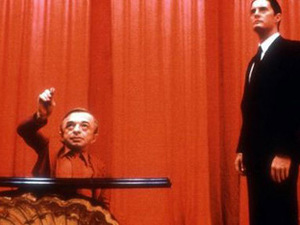
Did this surprise anyone? If you haven’t seen it then it probably did, but David Lynch’s Twin Peaks has got to be the finest piece of film out there, and the best thing is…it was all a middle finger directed at a critic who basically said that “Any film director who decides to direct for TV has failed” (I’m paraphrasing here) Lynch began his work on Twin Peaks which was not only a TV series, but the most stigmatised of all TV series, a soap opera. Despite being a soap opera it also points fun at them, everyone in the small town of twin peaks is having an affair, the situations characters are involved in start off as larger than life but end up incredibly surreal (as Lynch does best). Without revealing too much one character near the end of the second series not only suddenly believes that she is seventeen again but also develops superhuman strength.
I imagine that some people are very lost while reading this. The story of Twin Peaks is as follows. Twin Peaks is a small rural town in the mountains that is a typical soap opera town, people have affairs, people make threats and people threaten each other. Until their lives are turned even more upside down by the discovery of the body of local girl, Laura Palmer. Agent Dale Cooper is called in to figure out what happened to Palmer and on his arrival, events in Twin Peaks start getting stranger and stranger.
With thirty episodes at just under an hour you’ll have your work cut out for you if you want to session this series but I heartily encourage it. It didn’t change my life but it certainly made me distrust owls a little.


Well there we are, my Top Ten Series for Nerds. Complete. I know that normally I would end saying something to help you get some life XP but let’s face it. If you manage to trawl your way through all the series that are on this list then you’ve probably gained more life XP than I could give you in a concluding statement. As always, questions, comments and all manner of lovely things are encouraged, including following the blog @Tapedup_glasses.

I’ll see you on the other side of a coffee and a slice of pie.

Sunday, 28 April 2013

Top Ten Series for Nerds (Part One)


10 – BRIGHT FALLS
As much as a list like this automatically brings to mind TV series this first one is actually web-based. Designed to build hype and explain some elements of the survival horror game Alan Wake, this series is not only superbly cast, well written and beautifully shot, it provides some fantastic scares that really fit in with the atmosphere of the game. If you’ve played the game then watch this series, if you plan to play the game then watch this first.


9 – DOCTOR WHO
This may sound like an obvious choice but there is a definite reason for it often appearing on lists like these. Despite some repetitive character profiles and some silly science fiction it really draws viewers into the world of The Doctor, from his changes in motives between regenerations to the sacrifices he makes every episode to save what he loves more than anything, humanity.


8 – THE WALKING DEAD
Another series that features often on top tens all over the internet. The Walking Dead is an adaptation of Robert Kirkman’s tale of a rag tag group of survivors trying to stay alive during a zombie apocalypse. While most films, series and games that feature zombies as a primary antagonist tend to focus on the conflict between survivors and zombies, The Walking Dead’s conflicts reside in the survivors themselves. Zombies still pose a very real threat but continually reminds us that no matter what the world goes through, man’s biggest threat will always be man.


7 – FALLOUT: NUKA BREAK
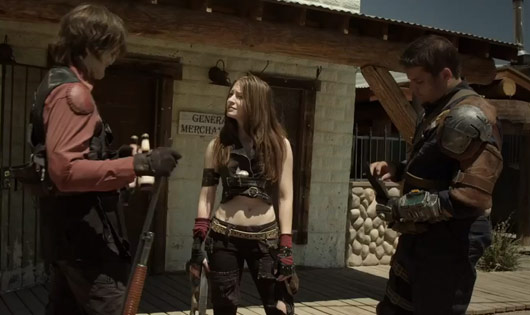
For a second time in this list, a web series makes an appearance. This independently produced set of short episodes follow three characters representing the three karma paths that can be followed in the Fallout series. At times the low budget is obvious but there are certain moments when you can really appreciate the effort that’s been put into it’s creation. For fans of Fallout this tongue in cheek take on wasteland survival is an interesting take on some of the other stories that the wasteland has to tell.


6 – SPACED
This two season sitcom launched the careers of Simon Pegg and Nick Frost, stars of Shaun of the Dead and Hot Fuzz. Why does this series make it onto the list? Because it contains more nerd culture references than you can shake a stick at, from Evil Dead to The Matrix. Every episode guarantees hilarity from laughing at some very cleverly placed quotes and parallel situations rather than laughing at how socially different nerds are, like some sitcoms do today.


In the next few days I’ll post the rest of this list.
As usual, comments and questions are encouraged and for regular updates, follow me @Tapedup_glasses.

I’ll see you at number 5 (Which you can get to by clicking here).

Saturday, 16 February 2013

Nerdy Music

I'm not sure if this has ever happened to you, if it has you might know why I've decided to write an article about this. While I was at work I was talking to one of my colleagues. Naturally we ended up talking about music, and while telling her about some of the artists I enjoyed she said: "You have a kind of nerdy music taste then?"
This caught me by surprise, I really don't have an out-of-the-ordinary taste in music. I listen to dubstep, hip hop, rap, ambient, electronic, rock, metal, folk, acoustic, pop, and (sometimes) orchestral music. It made me think, "Is there actually such a thing as 'nerdy' music?"

Now I can't speak for the rest of the world but here in the UK there are definitely a couple of stereotypes of the sort of music we nerds listen to, and they're on opposite ends of the scale (if we're not being technical. I know there are a lot of similarities between these genres, but bear with me here, do you want a pony for your birthday or not?), these stereotypically 'adored by nerds' musical styles are those of metal and classical. Why? It's hard to say. It may be because nerds stereotypically exist on the fringes of popular culture and classical music isn't usually listened to by young people. It could be because nerds were cast out socially and metal is a "socially offensive" genre. However, I believe it is safe to say that whether this stereotype is true or not it doesn't make classical or metal music 'nerdy'. There are plenty of people who don't consider themselves part of this social group who listen to it, so maybe it's the content of the music that would make it 'nerdy'.

"Ladies and Gentlemen, I would like to present the London Invisible Orchestra...except I'm not sure if they're here yet."


Let me give a few examples here, there are some artists that do embrace some elements of nerd culture. The rock band, Coheed and Cambria tell stories from the Amory Wars series of graphic novels written by their lead singer, Claudio Sanchez. Rap group Jurassic 5 often feature lyrics describing the bullying they received at school for being nerds, as do the earlier works of Gym Class Heroes. UK based band, Fightstar pull their inspiration from the anime series Neon Genesis Evangelion and Motion City Soundtrack not only dress in a stereotypical nerd fashion, their songs often reference nerd culture topics such as playing Xbox, watching re-runs of Twin Peaks and a startling analysis of slasher horror films. But does this make these bands nerdy?

In short, No. In fact I don't believe there is such a thing as nerdy music. Sure there are types of music that nerds stereotypically listen to and artists that reference nerd culture, but judging a band or artist as 'nerdy' is as ridiculous as labelling a band as producing 'stoner music' or 'hipster music'. As is judging someone by their music, letting your music taste define your way of life or letting your lifestyle dictate what music you should and shouldn't listen to. All in all the message of this (rather short) article is: be who you are, and be proud of yourself for who you are. 

I'll see you on Twin Peaks afternoons (Bring expensive wine and Cordon Bleu).

Wednesday, 30 January 2013

Split/Second: An Obituary.


In 2010 I played the demo of what was going to become one of my favourite games of all time. It didn’t have the twisting storyline that I usually look for when purchasing a game; it didn’t have gameplay that was polished to a mirror shine and it wasn’t from a developer that had produced a game I had ever been excited about. Yet after a mere twenty minutes of playing the demo, I was hooked.

The game in question is Split/Second: Velocity, an action racer from the company that brought us The Lion King and Mickey Mouse. Yep, that company is indeed Disney, albeit Black Rock Studios, a sub-facet of Disney Interactive, its still Disney. In 2011 I learned that despite its surprising positive reviews, Disney gave up on the franchise, and a sequel to the ‘smashy smashy boom boom’ racer, (the category I made up in order to further compartmentalise this game) sank below the horizon, never to be seen again.
In the light that this is probably the only Split/Second game to ever be made I would like to take some time to give it some verbal affirmation, an obituary if you like, marking the (almost) anniversary of when my heart was broken (slightly. It’s alright, I’m not a moron. I know it’s just a game).

So why did this game capture my heart? Was it the graphics, the innovation? Well the graphics and cinematic quality were pretty good for a game of its type. The way the camera shook and swayed from side to side and even got dirt on it when opponents took turns trying to clobber your vehicle with a wrecking ball, a missile or god forbid, a building, added to the excitement and the TV show premise that the creators were trying to portray (which was cemented by a “Next time on Split/Second” at the end of a section and “On today’s Split/Second” at the beginning). The innovation that the game contained was clever but by no means did it push boundaries. The augmented reality heads up display had been used to an extent previously and the idea of an arcade action racer has been around for a really long time, however the most innovative part of the game was in fact the weapons system. Gone were the days of sliding your car into a pickup to generate a random weapon on the side of it; in Split/Second, the track was your weapon. When your car jumped and drifted it would build up power (shown in a bar behind your vehicle) and as you careered round the roads, you could use some (or all) of this power. “But what would you get in exchange?” I hear you cry. In exchange you would receive an explosive barrel that was dropped from a helicopter onto the cars in front; a fireball that would rip the side of a building off and send your opponents to the scrapheap and in some cases, a 747 that would hurtle down the track wrecking anything in its path. Half the fun was trying to work out what would be set off by pressing “fire” at the right moment.

When this first happens to you, there are no words to describe how you feel. Apart from "crap."
Despite this excellent display of creativity my favourite element was what gamers tend to hate: dying. In most games of this quality, getting involved in a situation that would inevitably leave your car in a worse state than Greece’s economy, would trigger a Burnout Paradise-esque cutscene, depicting the last thrilling moments of your vehicle’s life. In Split/Second it was different. If you were speeding towards a crumbling building the game would let you live every millisecond of that crash up until the point of impact, and as soon as you hit, the cutscene would kick in, fooling you into thinking that next time it happened you could make it. The result was that sometimes you did make it. Holding off on notifying the player that they were done, for an extra hundredth of a second, suddenly made close calls and escapes more possible, more intense and a whole lot more exciting.

The other part of the game I really want to affirm is the difficulty. It was quite a shallow learning curve, it was not hard to get good at the game, by all means it wasn’t easy but let’s just say it was no Dark Souls. This meant that once you had beaten the game and had decided that you wanted to venture into the world of multiplayer, the learning curve suddenly shifted its gradient. Since everybody online was good at the game it became a whole lot more competitive, everybody knew how to dodge your attacks and you knew how to dodge theirs. Learning changed from finding out what happens when you trigger an attack on this part of the track, to finding out how you can trigger an attack on this part of the track without it missing.

Ah. I knew I should have checked myself.
I could talk for a long time about all the things I loved about this game. I won’t because I believe experiencing some of these things first hand is the only way to love them. I will say one more thing, something which I think summarises the real tragedy of the cancellation of the Split/Second franchise:

I am proud to say that I was once a rank 1 player, I put the game down for about six weeks and when I picked it up again I dropped immediately to rank 66, and you know what? I loved every second of it. If you put down a game for a year, come back to it and are still amazing then that’s fine, games are basically toys after all. If however you put down a game for a month, come back to it and you are awful, then that’s not a toy. That’s a damn sport!

I’ll see you next time, on Split/Second.

Saturday, 8 December 2012

Teeny Tiny Playing Things: Minigames


During a recent game of Magic: The Gathering, one of my opponents used a card called “Mine, Mine, Mine!”. For anyone who isn’t familiar with this example of silliness, this means that every card that you have in your library becomes part of your hand. “Mine, Mine Mine!” is part of the more humorous set of cards released during Magic’s life. Natuarally, the idea of comical cards in an otherwise serious game amused me, so I decided to look up some of these “jokers in the pack” and came across a card which (had I the spare cash) I would definitely buy. The card in question is “Enter the Dungeon”, which requires a sub-game of Magic to be played, under the table, literally. This mini-Magic-game made me think about other games-within-games. Now I know that’s a rather large topic to cover, so let’s take a look at a much smaller piece of it: minigames. 

Let’s start with some definition: what would count as a minigame? I personally would define it as any game which exists within the game you are playing, yet does not directly contribute to the game’s standard goal. For example, during a playthrough of Fallout: New Vegas, a player will experience lots of opportunities to play Blackjack, Roulette or Caravan. These small table-games are minigames: they are games within the game, that earn caps (money basically), and though, yes, caps help you buy stuff which can help you to win the game, it is more of a by-product than anything.

Like Fallout: New Vegas, other games (such as the Fable series) also feature gambling-based minigames. This is totally understandable for a few reasons. One, gambling is addictive and can encourage a player to spend more time on the game; two, rewarding the player with currency makes it a positive activity for the player, increasing their overall satisfaction with the game; three, gambling is a straightforward template for a minigame as its popularity and simple motives allow it to be translated to pretty much any setting. Bethesda’s Rage also uses this template in its holographic gunslinger board game. You place a bet, roll four dice and depending on what you roll, the gunslinger either kills his four attackers or is killed by them - simple, addictive and actually quite a clever concept for a game. (I have a feeling I may turn it into a drinking game when this article is posted). The second of Rage’s minigames consists of simply getting into a car and racing it. These minigames are all quite easy to find, but there are some that lurk in the shadows, put there as a reward for those who are diligent enough to find them.

"I want a cup of tea!"

I am of course talking about easter-egg minigames. These little biscuits are incorporated into games more for fun than advancing the storyline or developing character relationships. Such an example is found in the funfair campaign in Left 4 Dead 2. You and three of your zombie-hunting buddies have stumbled across an abandoned carnival. After a few levels you may think to yourself, “Wow. Valve have really tried hard to bring variety to the scenery.” when travelling through the sideshow section.  These attractions aren’t all just for show. There is a working “Whack-a-mole”, “Strength Tester” and “Shooting Gallery”, all with achievements aplenty, including one of the hardest achievements of the game (but I’ll leave that to you to discover for yourselves). Other hidden minigames require some more “out-of-the-box” thinking, like the low-res games hidden in Call of Duty: Black Ops. These arcade offerings are another basic way to incorporate minigames into stories, even in games where you wouldn’t think they would fit.

"Could you identify the zombie that "ate all your pies" please."

Starcraft 2 features one of these “How did they have time to fit that in there?!” minigames in the form of ‘Lost Viking’, a top-down space shooter. Don’t get me wrong, it’s a great idea. The 16-bit graphics and complete change in genre give the player a welcome break from tackling those pesky Zerg. But is it all worth it? If you play a game you want to play a game, right? You don’t want to worry about the outcome of yet another game within this one. So why do minigames keep cropping up?

I believe it is a combination of two reasons, one financial and one more heartfelt. The first reason being an elaboration of something I mentioned earlier: because it makes us feel like we’re getting more value for money. If we spend time on the minigames we take longer to finish the actual game, which means that we perceive the game to be longer than it is and have more content than it does, associating the developer with value for money. The second reason is that minigames are fun. Not just for the player but also the developer, they give a chance to change the pace and to add a lighter side to what could be a very dark and heavy game.

Whether you enjoy minigames, search for them and take full advantage of them, or hate them, avoid them and couldn’t care less about them, it must be admitted that they are incredibly useful and sometimes even powerful devices within the gaming industry, for changing how we feel about a game, helping us become more immersed in it or cementing the realism of an environment or world in which a game is set. For this I feel they must be respected, but what do you think? Do you feel more satisfied after playing a game incorporating minigames? Are there any noteworthy games-within-games that I’ve left out of this article? Let the world know.

I’ll see you in a nook or cranny that most people don’t investigate.

Sunday, 2 December 2012

Zombies Through the Ages

No dissection of geek/nerd culture would be complete without briefly mentioning zombies. Whether you enjoy taking part in the co-op, horde-hustling action of Left 4 Dead, or watching the gritty lonesome road of 28 Days Later, we geeks know that one day we will need to get ready for the dog eat dog (or human eat human) world of the zombie apocalypse. Yet with so many iterations of infected, what sort of undead are we likely to face? In this post I hope to cover as many as I can so we can all be prepared.

Like most popular fictional incarnations, the roots of those loveable brain biting blokes are in ancient mythology, in this case Sumerian. They are featured in the Epic of Gilgamesh though could even date back further, the texts reads: “I will knock down the gates of the Netherworld, I will smash the door posts and leave the doors flat down, and will let the dead go up to eat the living! And the dead will outnumber the living.”

"Good News for the more fashionable amongst you. In a battle of high heels vs. chainsaw, high heels win."

While many pieces of literature including work by H.P. Lovecraft and H.G. Welles touched upon themes that were reminiscent of what we now think of as “the zombie” it was of course George A. Romero’s Night of the Living Dead that gave us what became the traditional image of the undead, shuffling slowly with an appetite for human brains, though it was a relatively long time before zombies evolved in full view of the public. Films such as Braindead and My Boyfriend’s Back, despite explicitly showing zombies’ hunger for human flesh rather than just brains, did not rise to fame very quickly at all. It was the next generation of media that showcased this alteration: the video game. Specifically the first Resident Evil game, released in 1996. Even that, however, showed zombies as the sort of creature that you wouldn’t need to worry about providing you had limbs which could propel you at a “non-backward” velocity.

This is where the zombie archetypes that we are more familiar with today come into play. Films such as 28 Days Later, the Dawn of the Dead remake and House of the Dead feature what my friends like to refer to as ‘the urban zombie’. Faster, more agile and more intelligent, these creations are more typically referred to as ‘infected’ rather than zombies. The common factor with all these undead monstrosities is that their brain must be destroyed in order to render them harmless (and dead…again).

So there we are. A quick trip through the history of the zombie. If you’re still worried about how to survive the zombie apocalypse, you’re perfectly sane, as for one, it’s a scary thought, and two I haven’t actually told you enough to survive. I know, I'm evil. But hopefully we are now all more aware of exactly what will be eating our brains, and everybody knows that it’s not how long you can survive against a zombie that impresses the girls, but how many facts about them you can reel off before experiencing that bite that goes straight through the speech centre of your brain. Sleep well everybody! As always, questions or comments are very much appreciated, so leave them here.

I’ll see you shuffling along at the end of the world.

Saturday, 24 November 2012

The Ten (Nerdy) Commandments

Life is full of instruction manuals, whether they consist of the “insert rod Q9 into slot A-12.” kind, that tend to come with any piece of  flat-pack furniture or the “thou shalt not” sort, that are contained in many religious texts (though if B.F. Skinner was around back then, the writers of these would have known that positive reinforcement was much more effective than the opposite and would have benefited from writing as such). Being a nerd however, does not have an instruction manual, and though it would be wrong to say that I am a fully fledged nerd, there are some tit-bits of advice that I wish someone had let me in on. This is something I wish to rectify by sharing now.

10. Thou Shalt Graciously Lose.
Nothing is more irritating than someone who can’t see past the fact that they didn’t win. From gracious losing (not rage-quitting and keeping your cool), the energy that would normally be spent on being angry can go elsewhere, to your brain for instance. This way, when losses happen, instead of getting angry, making excuses and blaming others, you will be able to search for the real reason you lost, and as a result you can improve yourself. A great way to do this is to watch replays of your games, for example, you could use the Call of Duty Theatre utility to see your matches from a spectators point of view; when not suffering from the stress of battle you make it easier to spot your mistakes.

9. Thou Shalt Graciously Win.
The only thing that comes close to being as irritating as someone being a bad loser is being a bad winner (perhaps apart from when someone leaves dirty underwear in your room…so, me in other words). Well done, you won. There’s a time and a place to celebrate and the second after someone else has lost, right in front of their face, may not be the right one. By all means congratulate yourself, you worked hard to win. Just don’t rub it in other people’s faces. You never know, by taking this on board, when you thrash someone, hang them out to dry, and hand their backside back to them in a Macey’s bag, simply by being a gracious winner you may gain yourself a new fan, protégé or even…apprentice (dum dum dum dum dum dum dum dum dum. Wow. John Williams’ Imperial March doesn’t translate to text at all. Wait a second.
That’s better).


8. Thou Shalt Always ‘Turn Up’.
Volume is not the subject here. As much as I would like to say “Play your music with reckless abandon.” I am very aware that you may get a visit from the police about that sort of thing. What I do mean is whether it’s a blog you are writing, or a game you are playing, it is important to commit as fully as you can to the activity that’s important to you. It doesn’t matter if you aren’t prepared for it or if you don’t feel up to it, just ‘turning up’ goes a long way. When asked what the secret to his success was, Starcaft commentator and shoutcaster, Sean Plott replied: “All I did was turn up. There were days that I had said I would shoot a Daily. Even if I wasn’t ready for it or didn’t want to do it I would make sure that a video went out.” Just turn up.


"Tim was both overjoyed and dismayed when he unwittingly discovered the hidden killstreak that turned your phone invisible."


7. Thou Shalt Spread Your Time.
You may only feel you have passion for one or two things. However, if you spend all your time (of course I’m not including time spent eating or sleeping, unless those are your passions) solely on these it can impede other aspects of your life. Whether it is your relationship with your friends and family, or your attitude towards your studies, there will always be more to life than just your ‘favourite thing’. It also helps keep your ‘favourite thing’ special, something you do for enjoyment and ensures that it doesn’t turn into a permanent chore.

6. Thou Shalt be Open.
As much as this suggestion is featured in a post about nerd culture it translates well to many situations. Not being closed off to suggestions or ideas helps you to better yourself. Learn from other people’s mistakes and allow yourself to consider other points of view. You may find something you like. Being stubborn can have advantages, yet I have found that being flexible can be even more advantageous.

5. Thou Shalt Suffer Fools Gladly.
Now I’m not making the assumption that every nerd out there is incredibly intelligent. There are a lot who aren’t. The point here is that despite how much you may want to punch someone who, even after the tenth time of you telling them to do so, doesn’t tap their creatures after attacking, despite the word “Vigilance” appearing exactly zero times on their card. You should remind yourself that they are still learning. Admittedly slower than a Programma 101 could load a ten second video, but still they are learning. By all means educate them, just don’t lord your intelligence over them and try not show off , it won’t make them feel any better and will make you look like a (excuse my language) big poo face.


"No Jimmy, combining Nirnroot, a Ruby and Mammoth Cheese does NOT produce Oprah Winfrey."

4. Thou Shalt Remember Thy Roots.
It’s all well and good harping on about how amazing technology is nowadays, just remember where that technology came from and appreciate how hard it was back in the day to get a piece of technology to do what seems so easy now. Make fun of Windows 4.5 while at the same time remembering how hard it was to make it. Scoff at dial-up and the irritating noises it made (which for some strange reason I miss), yet remember that it was one of the valuable stepping stones in the path to broadband. By doing this you will remember not to take anything for granted and be more appreciative of what you have today.

3. Thou Shalt be Aware of Apple’s High Prices.
Apple computers and gadgets are pretty, very pretty. Though be ever aware that you are paying an extra couple of hundred pounds (or yen, dollars or goats) for technology which was surpassed within the last two years. If you work in one of the many media sectors however, I am sorry; you haven’t got much of a choice any more. For those who don’t, feel free to buy one if you want to, nothing is stopping you , just make sure you have weighed up all your options first.

2. Thou Shalt Take Advantage of Thy Skillset.
If there are skills, talents or abilities which you have developed through nerdy activities, use them in the real world (and vice versa). Planning and resource management don’t just belong to Command and Conquer. They can be put on a CV as well. Sure there are some things which don’t translate to the real world easily, simply work out how they could be utilised in any way possible. For example, saying you are part of a clan that plays Halo successfully can be a sign that you work well in a team.

1. Thou Shalt be Proud of Who Thou Art.
This one is pretty self explanatory. You are who you are. Don’t be closed to the idea of change but also try not to be ashamed of what you do as a nerd or geek in order to please others. You play video games, you read comic books. Certainly if what you do is bad for you then some changes must happen but if the problem is that people are prejudiced against you simply because of your activities then ignore them. As Oscar Wilde said: “Be yourself, everyone else is already taken.” wear your various badges of nerd status with honour and pride, it’s a more exclusive club than you realise.

So there we go. As much advice as I feel I can bestow upon you. Take it and go forth. Or if you want, don’t take it and go forth. It’s up to you. These are just some of the things I wished I hadn’t had to learn by myself. I hope that you too can learn from them and that you teach others what you’ve learned. As always I welcome any comments or opinions to be left here.

I’ll see you in Forbidden Planet.

Friday, 9 November 2012

3: A Magic Number


(The Art of the Trilogy)

This post is inspired by the sign-off for my previous article entitled The Most Compelling Relationship in Video Games. If you want to then it can be viewed by scrolling down to lower on this page or by clicking here.
When looking at how different story arcs are portrayed I believe that some of the best games or films are those that appear as a trilogy, there are two reasons for this. One: It splits up the development of main characters, and two: it helps to put into perspective the level of peril that characters find themselves in. I should note that I’m not saying that all trilogies follow these formulae. I’m also not saying that trilogies should follow them (but if Jerry Bruckheimer is reading this and decides to base his work upon my scribblin’s, then go ahead); this is merely an analysis of the patterns I have found in some of the ones I have enjoyed.

Firstly the development of characters in trilogies (and I mean trilogies that were always intended to be trilogies, not single films that have been given two sequels in order to transform them into money machines, which is why Transformers probably won’t be mentioned here) such as Christopher Nolan’s Dark Knight Trilogy and Shepard’s story arc during Bioware’s first three Mass Effect games tends to follow the same pattern. It also bears a resemblance to the description of how ‘productive teams’ are formed in business. Most groups do indeed go through this process but it must be completed in order to become productive, the process is as follows: groups go through forming, storming, norming then performing.

 "And to your left you will see...oh...more space."

Forming: Simple in the fact that all groups must initially form in the first place. Because this is new and exciting, group members get on well. Negative character traits aren’t noticed or are ignored.

Storming: The group begins to break down as bad habits grate and incompatible personalities clash. This causes undesirable performance of the group.

Norming: Members find ways to overcome, work with or use to their advantage, bad habits or negative traits and the group finds a happy medium in which to work.

Performing: Due to dealing with group problems, the group works together more effectively, causing production to increase and the group to perform well.

For this example it may be appropriate to add a fifth stage to this process called Deforming, as every group that is created needs to end, whether that is for a simple reason such as reaching the end of a contract at work or for a complicated reason such as a band breaking up due because of artistic differences.

Trilogies such as the ones previously mentioned will tend to follow this process with the first film/game showing characters forming, storming and norming, the second depicting them at their peak where they demonstrate performing and the third instalment demonstrating deforming. When films or games follow this process it seems to produce the most satisfying character development due to its depiction of real life group dynamics and character development over enough time for it to be perceived and analysed, without it taking up so much time that the threats that characters encounter are not resolved in a satisfactory manner. In fact the threat, its nature and scale are the main factor in the other pattern I noticed that trilogies of this nature have. The ‘threat level’ pattern is as follows:

Instalment one: A general threat which is not of massive or miniscule importance.

Instalment two: A threat to the entire environment in which the story is set.

Instalment three: A threat personal to the protagonist(s).

An easy-to-understand example of this is The Matrix (and yes I know that the original matrix trilogy was meant to be a little different but this too followed the patterns that I’m describing. So…yeah.), where Agent Smith should be considered as the threat and Neo as the protagonist. In the first film Agent Smith is merely one of the many threats that the matrix holds for Neo, the second shows Smith trying to take over the entire matrix for his own gain and the third depicts Smith’s personal grudge against Neo.

 "Not many people know that The Matrix featured some of the worst dance moves ever shown on film"

So what am I trying to say? I’m not trying to build up to anything large or profound here, and I certainly don’t believe that this blog is going to change the way writing is thought of. What I do hope is that what has been written here makes you think about how stories are presented to you and that, when you get to the end, a small idea which has been mentioned here attaches to your brain and helps the pieces of something that you may have had a hard time thinking about fall into place. As always I welcome any thoughts or comments you have on the matter to be discussed here.

I’ll see you in part III.

Saturday, 3 November 2012

The Most Compelling Relationship in Video Games.


From the early nineties, video game creators made an alteration that would change the game industry for the next quarter of a century. Games began as very elaborate puzzles, and the only objective a player had was to complete the game (or to not complete it when your parents said “After this level you need to play outside”). In this time of video game revolution it was the writers that won as games started to include more elaborate storylines. Some, which could even be described as reminiscent of a soap opera (I’m looking at you Final Fantasy).
These great arching storylines, twisting plots and epic dialogue could not be achieved without building one very important factor: character relationships.

When a characters relationship is being created, sometimes it is what we gamers as an audience don’t know that makes a relationship interesting, such as the relationship between Yuri and Makarov in Call of Duty: Modern Warfare 3. We know that both of them worked together as ultranationalists and that despite the atrocities that they committed, Yuri was under the ultranationalists’ grip and was constantly reminded of the reasons for why they did what they had done (If Oprah was around she would have shut that controlling relationship down). So what exactly caused Yuri to defect to the FSB, almost resulting in his death? It is not made obvious and it is this lack of knowledge, this need to know more that makes their relationship interesting.

"The Company Paintballing Weekend."

Another interesting aspect to a relationship is when two different species or even intelligences interact. For example, Master Chief and Cortana from the Halo series or EDI and Joker from the Mass Effect franchise. Both are examples of a love story between an organic character and an artificial intelligence. However, they could not be further apart. Where Cortana and Master Chief’s story is one of unrequited love, Joker and EDI have one of a successful relationship, though both cover the philosophical question, if something is a computer simulation, is it capable of emotion? What is emotion anyway? Although saying that I’m pretty sure my computer has a tantrum every now and then: “But I don’t want to connect to the internet.”
“You are in my room and while you are in my room you will follow my rules! Is that clear?”
“I wish mum was here!”
“Well Mum’s gone to the shops at the moment so I’m the best you’ve got!”
“I hate you!”
“You don’t mean that”
“I do!”
*Blue screen of death*
“What have I done?!”
I think maybe I went too far with that one.

Now I’m a fan of a lot of franchises, and one that has become a favourite is Batman, and the relationship that I find most compelling in any video game is between our very own Dark Knight and Mr. Freeze. I know, a lot of people would say I missed a trick if I didn’t rate Joker and Batman as a more interesting relationship. Yes they have their twists and turns and maybe they have the most interesting storyline of all the Batman villains, but I’m going to stick my neck out, put my cards on the table and take the plunge here. The reason I find their relationship so interesting is their motives. Batman wants to keep Gotham City safe and Mr. Freeze just wants to save the life of his wife, both are noble deeds, yet it is the fact that when one person is trying to save the majority and the other the minority you will inevitably find conflict. The relationship is demonstrated well during the Arkham City campaign. Batman saves Freeze from death at the hands of the Penguin (which I find rather funny when I think about it), he asks him to save his life in return and synthesise a cure for the disease he has been infected with. Freeze refuses saying that his wife has been taken by the joker and that as long as she is in danger he will not do anything for Batman. They then begin their scuffle.

"I knew I should have hidden in the cupboard."

I believe that the other reason a relationship like this is so interesting to me is that it is so true to life. Few of us would say that we are inherently evil, everything we do is justified by our own motives and reasons, reasons we see as being good. Yes games would be very boring if every character relationship was realistic, that’s the whole reason we play games, to get away from reality for a little bit. The main point I am trying to make is that you can create the most epic, expensively produced, twisting storyline the world has ever seen. However, unless your audience can relate to the characters that you’ve created, it will all be for nought. Any comments you have about this article are greatly appreciated and I encourage you to leave them here.

I’ll see you at the end of a long story arc that will probably span at least three games.